 kayetana
Less retyping. More visibility.
Delivery notes, bills of lading, shipment inquiries and voice notes from the road: in logistics, information comes in many forms. kayetana turns it into a format your systems can work with.
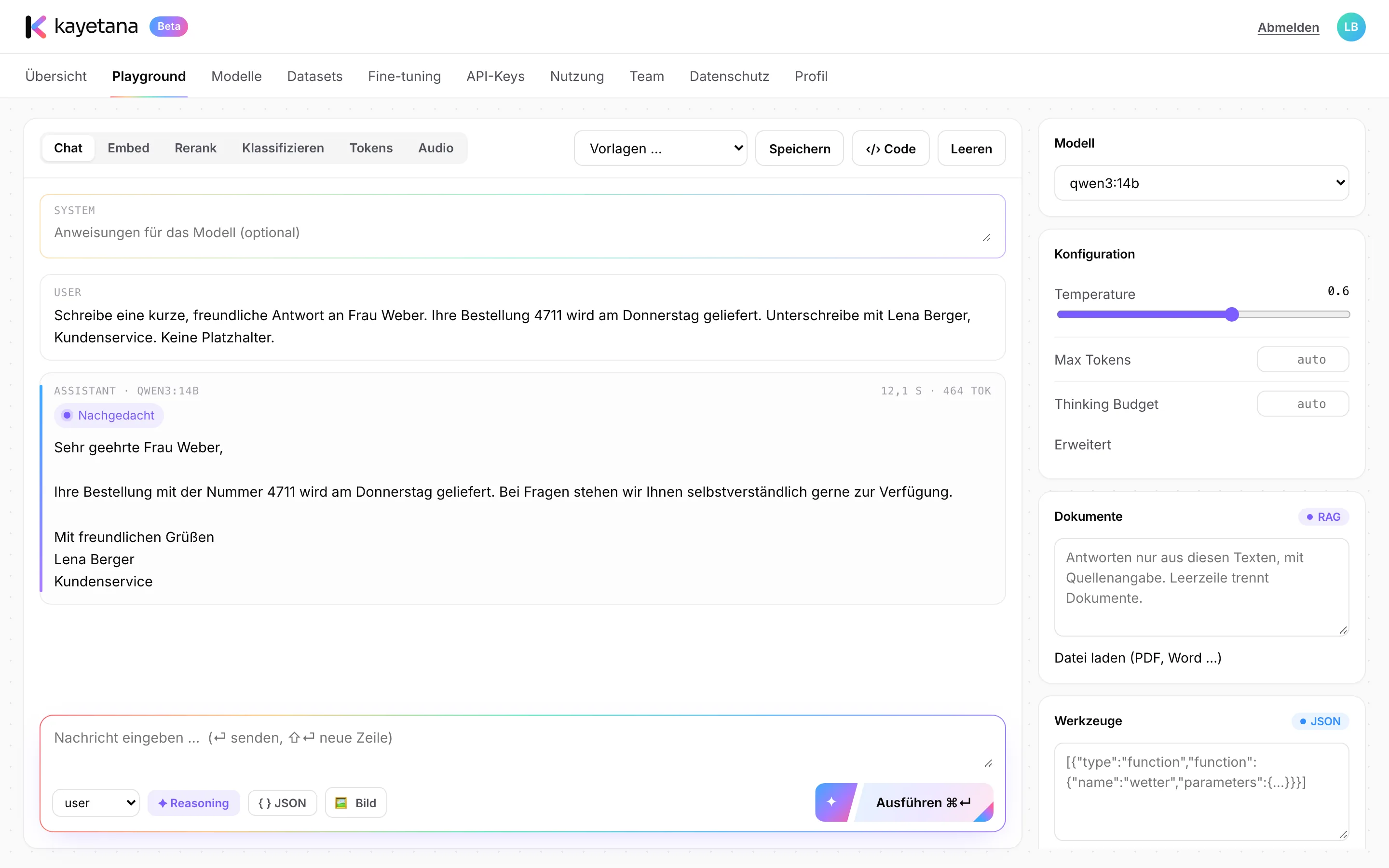
Turn shipping papers into fields.
Load delivery notes or bills of lading as PDF or Word files. In JSON mode, kayetana pulls out shipper, consignee, weight or delivery date and returns them as fixed fields. With models that understand images, photos of paperwork work too.
- Output as JSON
- Read documents with parse
- Images as input with suitable models
Where kayetana helps in logistics.
Sort shipment inquiries
Pre-sort emails by topic like delay, damage or pickup.
Query handbooks
Load warehouse and loading instructions and get answers with citations.
Transcribe voice notes
File messages from drivers and the warehouse as text with timestamps.
Connect your systems
Link kayetana to your warehouse or transport management system via REST API.
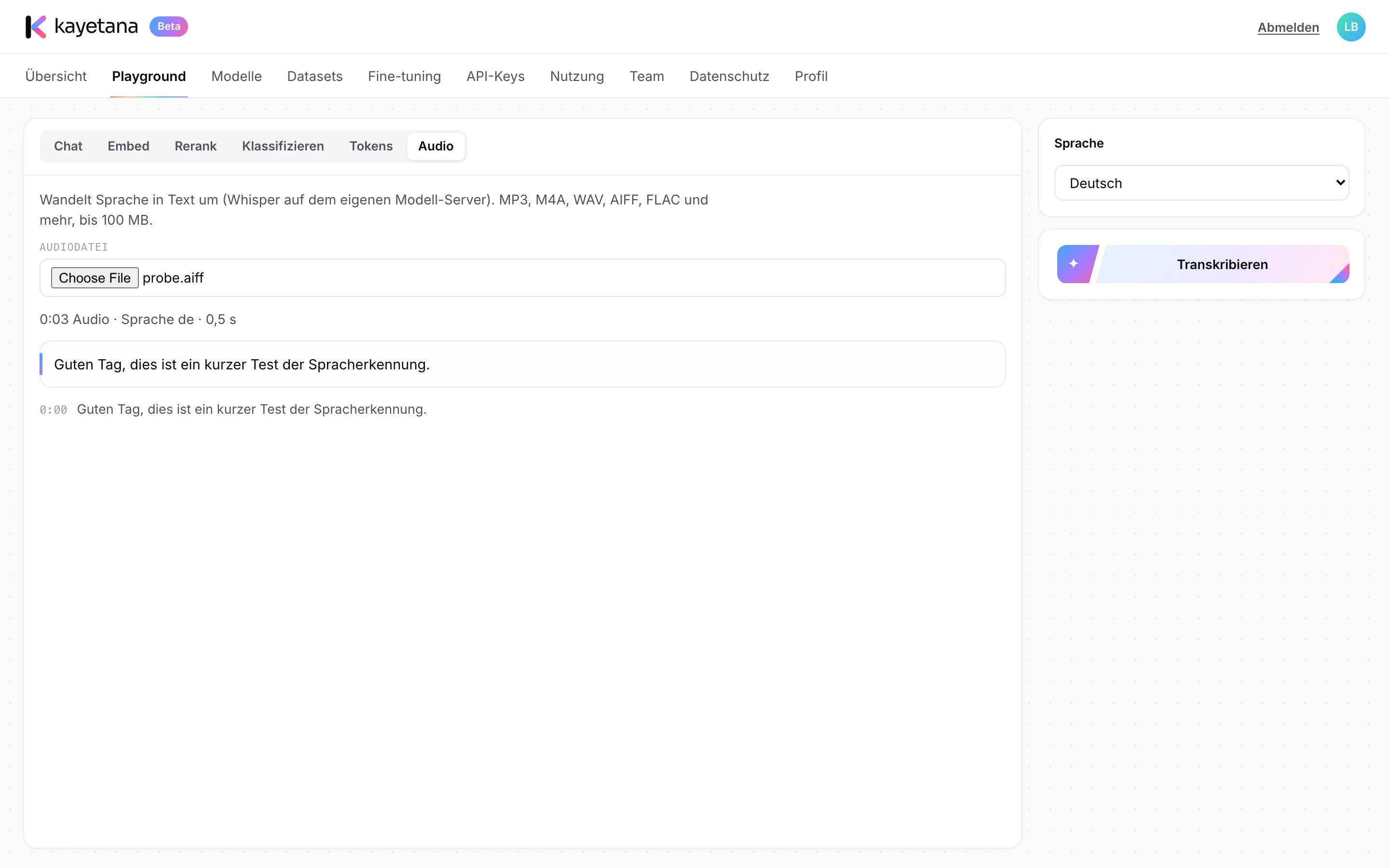
What's said on the road ends up as text in your system.
Upload voice notes or call recordings as MP3, M4A or WAV up to 100 MB. kayetana transcribes them with timestamps. You can then sort the text with classification or attach it to the shipment.
- Timestamps in the result
- Selectable language
- Also via API with transcribe
What stays under your control.
- One API key per application, with a monthly limit
- Usage per day, key and model
- Response time and error rate at a glance
- Prompts and responses are never stored
- Daily backup at 3:15 a.m.
- A flat fee instead of per-token billing
See kayetana with sample paperwork.
In the demo, we extract data from a sample delivery note and sort shipment inquiries.
Frequently asked questions
Which document formats can kayetana read?
PDF, Word (docx and doc), RTF, ODT and HTML. The parse endpoint does the same via API.
Can kayetana read photos of delivery notes?
With models that understand images, you can use pictures as input. The model management page shows which models can.
How do I connect kayetana to my software?
Through the REST API under /v2 with an API key. The playground shows sample code for Python, TypeScript and curl.
What happens if an application uses too much?
Every key has a monthly limit. Once it's exceeded, the API returns status 429.